2026 Mac Studio with M5 Max and M5 Ultra: Specs, Price and Release Date
A rundown of the 2026 Mac Studio with M5 Max and M5 Ultra: specs, price and release date, measured local LLM performance with Qwen, and pros and cons versus the NVIDIA DGX Spark.
Contents
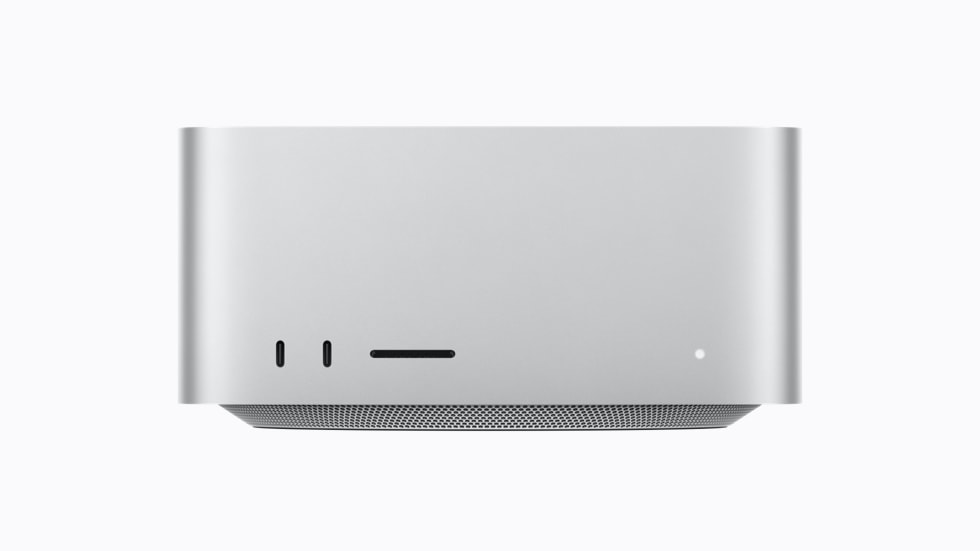
On August 25, 2026, Apple announced a new Mac Studio with the M5 Max and M5 Ultra chips. It is the first update in about a year and a half since the 2025 M4 Max and M3 Ultra models, and Apple calls it "our most powerful Mac ever"1. The design is unchanged, so this is a spec update focused on the chips and connectivity. I put together what changed, based on Apple's official announcement.
Key specs of the 2026 Mac Studio
M5 Max and M5 Ultra chips
The new Mac Studio comes with a choice of two chips. The M5 Ultra is the first Ultra chip with a Neural Accelerator in every GPU core1.
| Item | M5 Max | M5 Ultra |
|---|---|---|
| CPU | 18-core (6 super cores + 12 performance cores) | Up to 36-core (12 super cores + 24 performance cores) |
| GPU | Up to 40-core | Up to 80-core |
| Unified memory | Up to 128GB | Up to 512GB |
| Memory bandwidth | Up to 614GB/s | 1.2TB/s |
| Media engine | H.264, HEVC, ProRes, AV1 decode | 2x the encode and decode blocks of M5 Max |
Memory bandwidth on the M5 Ultra is 50% higher than the previous generation (M3 Ultra). Up to 512GB of unified memory will probably stand out most for anyone who wants to run large LLMs locally. Note that the 512GB model ships later than the others, in late October1.
Storage and connectivity
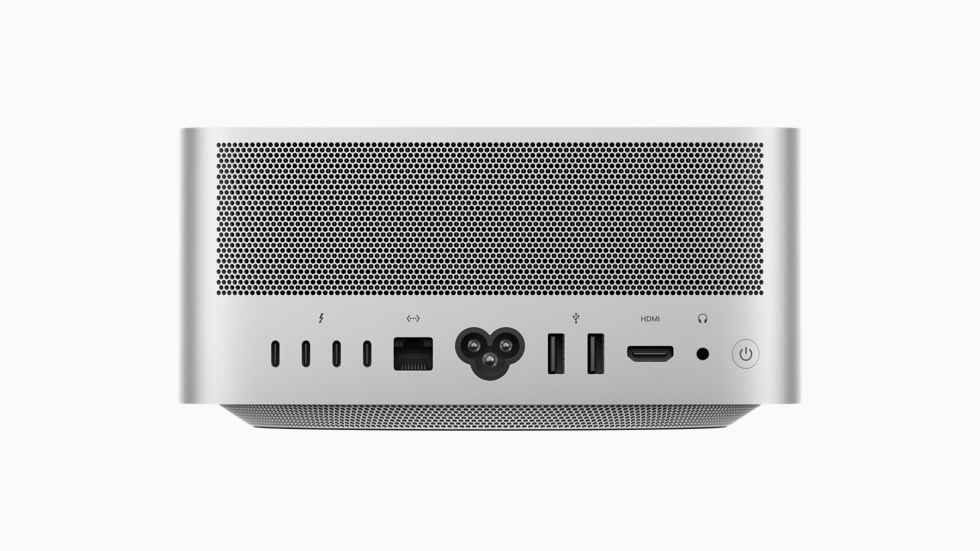
- SSD: A new SSD architecture that is up to 2x faster than the previous generation.
- Thunderbolt 5: Up to six ports, up to 120Gb/s each
- Displays: Up to eight displays, or up to four Studio Display XDR at 5K and 120Hz
- Wireless: Wi-Fi 7 and Bluetooth 6 through the Apple-designed N1 chip (a first for Mac Studio)
- Genlock over USB-C: Syncs video with pro cameras such as iPhone 17 Pro
- Clustering: Multiple Mac Studio systems can be linked over Thunderbolt 5 with RDMA to split AI inference work.
Apple's performance claims
All of the figures below come from Apple's own testing in July 20261. Real-world performance depends on the workload and configuration, so treat them as a reference.
M5 Max (vs. M4 Max)
- Up to 3.9x faster LLM prompt processing in LM Studio
- Up to 3.5x faster text-to-image generation
- Up to 3x faster Magic Mask in DaVinci Resolve Studio
- Up to 50% faster GPU performance
M5 Ultra (vs. M3 Ultra)
- Up to 4.3x peak AI compute
- Up to 4x faster prompt processing in LM Studio
- Up to 3.3x faster ML training with Foundry Nuke CopyCat
- Up to 1.3x faster multithreaded CPU performance and up to 1.8x faster graphics
- Up to 33 simultaneous streams of 8K ProRes 422 at 30fps
Overall, the gains on the AI and GPU side are much bigger than the CPU gain (1.3x). That comes from the Neural Accelerator in each GPU core, so GPU-heavy work like local LLMs and image generation should feel the biggest difference.
Real-world local LLM performance (Qwen and DeepSeek)
The figures above come from Apple's own testing, so I looked up measured results from reviews published after launch. Token generation speed for local LLMs depends far more on memory bandwidth than on raw chip performance, which is exactly where the M5 Ultra, at 1.2TB/s, has the edge.
Qwen 3.8 27B (dense model)
Tom's Hardware ran Qwen 3.8 27B (Q4_K_M), a dense model that leans heavily on memory bandwidth, in llama.cpp and compared it against the M4 Max and NVIDIA DGX Spark2. Generation speed (tokens/sec) by context length was as follows3.
| Context | M5 Ultra | M4 Max | DGX Spark |
|---|---|---|---|
| 0 | 46.3 | 22.7 | 11.8 |
| 16K | 43.4 | 21.1 | 11.0 |
| 64K | 32.4 | 14.6 | 9.3 |
| 128K | 30.1 | 9.0 | 7.7 |
The M5 Ultra is about 2x the M4 Max and about 4x the DGX Spark. Time to first token (TTFT), however, was only faster on the M5 Ultra up to 32K, and at 128K the DGX Spark was quicker (295.8 s vs. 236.8 s)3.
In BGR's review, using a 4-bit MLX version in LM Studio, the same model ran at about 55 tokens/sec on the M5 Ultra and about 40 on the previous-generation M3 Ultra. The M5 Max (MacBook Pro) was roughly on par with the M3 Ultra4.
Qwen MoE models
MoE (mixture of experts) models are large overall but use only some of their parameters per token, so they run faster than dense models.
- Qwen 3.5 122B A10B: about 80 tokens/sec on the M5 Ultra vs. about 60 on the M3 Ultra (LM Studio)4
- Qwen3.8-Flash-Next: 90.7 tokens/sec at 4K context on the M5 Ultra (256GB) with MLX, and still 60.6 at 128K. Prompt processing at 16K was 2,887 tokens/sec, about 2.5x the M3 Ultra (1,143) (measured by MacStories)3.
DeepSeek
I could not find any published measurements of large DeepSeek models on the M5 Ultra yet. Only estimates calculated from memory bandwidth are circulating, so I have left them out. Large models like DeepSeek V3 and R1 (671B) need hundreds of gigabytes even at 4-bit, so proper results will likely have to wait for the 512GB model arriving in late October.
Comparison with NVIDIA DGX Spark
The machine most often compared with the Mac Studio as a local AI desktop is the NVIDIA DGX Spark, a palm-sized AI computer with the GB10 Grace Blackwell chip and 128GB of unified memory5.
| Item | Mac Studio (M5 Max) | Mac Studio (M5 Ultra) | DGX Spark |
|---|---|---|---|
| Chip | M5 Max | M5 Ultra | GB10 Grace Blackwell |
| Memory | Up to 128GB | Up to 512GB | 128GB LPDDR5x |
| Memory bandwidth | 614GB/s | 1.2TB/s | 273GB/s |
| Operating system | macOS | macOS | DGX OS (Linux) |
| Multi-unit linking | Thunderbolt 5 + RDMA | Thunderbolt 5 + RDMA | ConnectX-7 200Gbps, up to 4 units |
Mac Studio pros
- Generation speed: With 2.2x (M5 Max) to 4.4x (M5 Ultra) the bandwidth of the DGX Spark, token generation for single-user chat and agent work is much faster.
- Memory capacity: The M5 Ultra goes up to 512GB, so a single machine can hold larger models. The DGX Spark tops out at 128GB, so bigger models require linking several units.
- Versatility: It doubles as a regular Mac for video editing and development, and runs local LLMs right away with LM Studio, Ollama and MLX.
Mac Studio cons
- No CUDA: The stacks used on cloud GPUs, like vLLM and SGLang, and the fine-tuning ecosystem are much broader on the NVIDIA side.
- Long prompts: As in the test above, at very long contexts like 128K the first token arrived later than on the DGX Spark, and prompt processing is about half the speed of an RTX 5090 (1,701 vs. 3,031 tokens/sec with a 6K prompt)3.
- Price: The M5 Ultra costs far more than a DGX Spark even at its starting price.
When the DGX Spark makes more sense
- When you develop or fine-tune models on CUDA, or want to test code headed for cloud deployment in the same environment. NVIDIA says a single unit can run inference on models up to 200B parameters and fine-tune models up to 70B5.
- When handling many requests at once. In LMSYS's testing, Llama 3.1 8B ran at 20.5 tokens/sec with a single request but reached 368 tokens/sec with 32 requests batched together6.
On the other hand, the same testing measured Llama 3.1 70B at only 2.7 tokens/sec, so the bandwidth limit is clear for running large models quickly as a single user6. In short, the Mac Studio fits running large models fast on your own, while the DGX Spark fits CUDA development or concurrent workloads.
Price and release date
Starting prices at announcement were as follows1. Actual prices vary with the configuration (memory and SSD), the retailer and timing.
| Model | Starting price (US) | Education |
|---|---|---|
| M5 Max | From $2,499 | From $2,299 |
| M5 Ultra | From $5,499 | From $5,099 |
- Pre-orders: from August 25, 2026, in 30 countries and regions including the US (from August 27 in Korea)
- Shipping and in-store availability: from September 22
- 512GB unified memory model: late October
Which model is right for you
Going by Apple's announced specs, the choice is fairly simple.
- M5 Max: Plenty of performance for video editing, 3D work and development at less than half the price. If 128GB of memory is enough for your work, this is the sensible pick.
- M5 Ultra: For work that needs more than 128GB of memory (such as running large LLMs locally), or that pushes the GPU and media engine to the limit, like multiple 8K streams or large-scale rendering.
macOS 27 is also due this fall as a free update, bringing Apple Intelligence and the new Siri features to the new Mac Studio1.
Check the link below for more details.
View Apple 2026 Mac Studio on CoupangReferences
Footnotes
-
https://www.apple.com/newsroom/2026/08/apple-introduces-new-mac-studio-with-m5-max-and-m5-ultra/ ↩ ↩2 ↩3 ↩4 ↩5 ↩6
-
https://www.tomshardware.com/desktops/mini-pcs/apple-mac-studio-m5-ultra-review ↩
-
https://www.contextstudios.ai/blog/mac-studio-m5-ultra-local-ai-guide ↩ ↩2 ↩3 ↩4
-
https://www.bgr.com/2264114/mac-studio-m5-ultra-review/ ↩ ↩2
-
https://www.nvidia.com/en-us/products/workstations/dgx-spark/ ↩ ↩2